
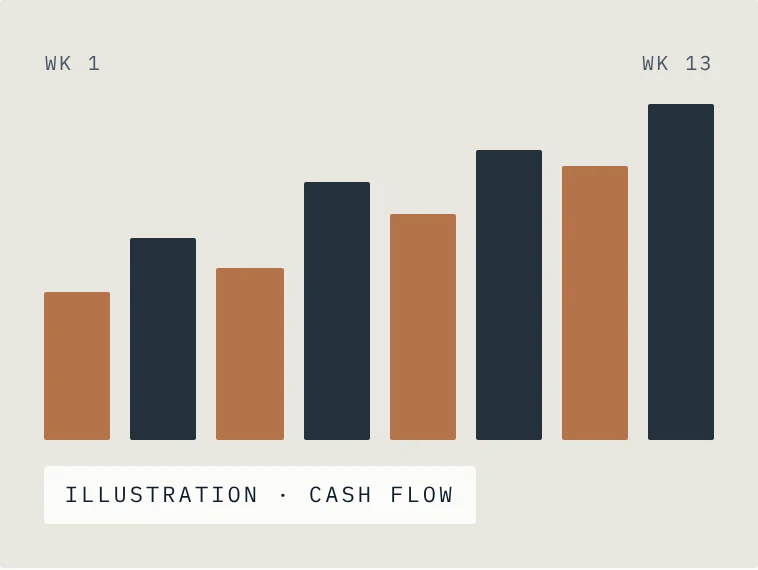
Profit tells you whether the business works. Cash tells you whether it survives the next quarter. A rolling 13-week forecast is one of the simplest ways to see a shortfall coming while there is still time to act.
Why 13 weeks
It is long enough to cover a full quarter, including VAT and payroll cycles, and short enough to forecast with reasonable accuracy. Working in weeks rather than months shows the timing of large payments that a monthly view can hide.
A structure that works
- Start with the actual bank balance today, not a figure from the accounts.
- List expected receipts by week, based on when customers really pay, not on invoice due dates.
- List payments by week: payroll, rent, suppliers, loan repayments, VAT, PAYE and Corporation Tax.
- Show the closing balance for each week and highlight any week that falls below your safety buffer.
Keeping it alive
A forecast is only useful if it stays current. Update it every week, compare last week’s forecast with what actually happened, and roll it forward by one week. That habit takes around half an hour once the template is set up, and it quickly improves your accuracy.
What to do with a pinch point
When a week dips below your buffer, you have options: chase specific invoices earlier, agree different terms with a supplier, time a purchase differently or arrange a facility before you need it. Spotting the issue weeks ahead is what makes those conversations easy.
We build the first version with you from your bookkeeping data and review it together until it becomes routine.
This article is general guidance, not advice for your own circumstances.